
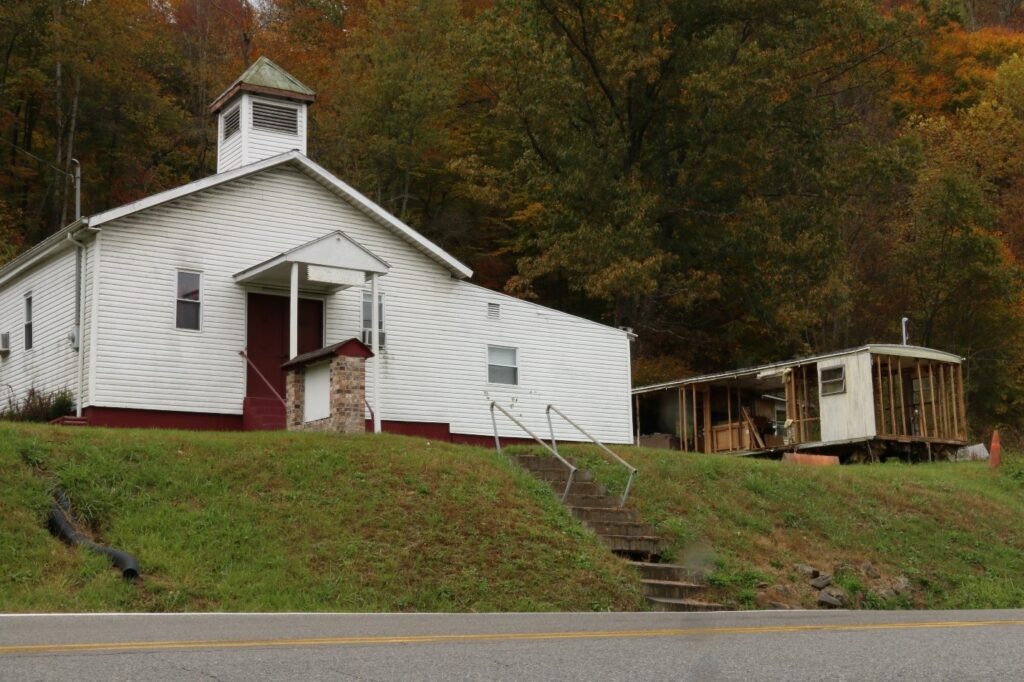
I usually avoid religion in my posts, but I can no longer ignore how some people apply their Christianity to coal and coal mining. Specifically…
“If God didn’t want us to use coal, he wouldn’t have put it here!”
I’ve heard it a dozen times from friends and family back home. It’s even been preached in sermons to coal miners and their families and proclaimed at pro-coal rallies. My question is….have we mined and used coal in ways that would make God happy with us? Let us look at the history of coal.
Short History
Coal mining began in Appalachia in the late 19th century. Coal mine owners paid as little salary as possible, often in the form of company “scrip” that could only be used to pay for company owned housing, food from the company stores, company doctors, and the tools and dynamite necessary to do your job as a coal miner in their mines. Through this system of peonage, coal companies kept miners and their families extremely poor and in constant debt within poorly built company towns often lacking in proper sanitation. The problems were manifold for eastern European immigrants recruited to the coalfields from major cities. Once in the coal camps, they found it was nearly impossible to leave with scrip only redeemable within company owned establishments.
Mining was also extremely dangerous work. Between 1900 and 1945, over 90,000 miners lost their lives in the nation’s coal mines. The present day total is now more than 104,000 miners and does not include the hundreds of thousands who were permanently disabled in accidents or suffered the long-term, debilitating effects of black lung.
Miner’s requests for better safety and to be paid in more than company scrip were never considered by the coal company owners. When their requests were denied, miners tried to organize unions and force the companies to do what they should have been doing all along. Company owners countered by hiring “security” companies such as the Baldwin-Felts Agency to harass—and even kill—miners who were attempting to organize.
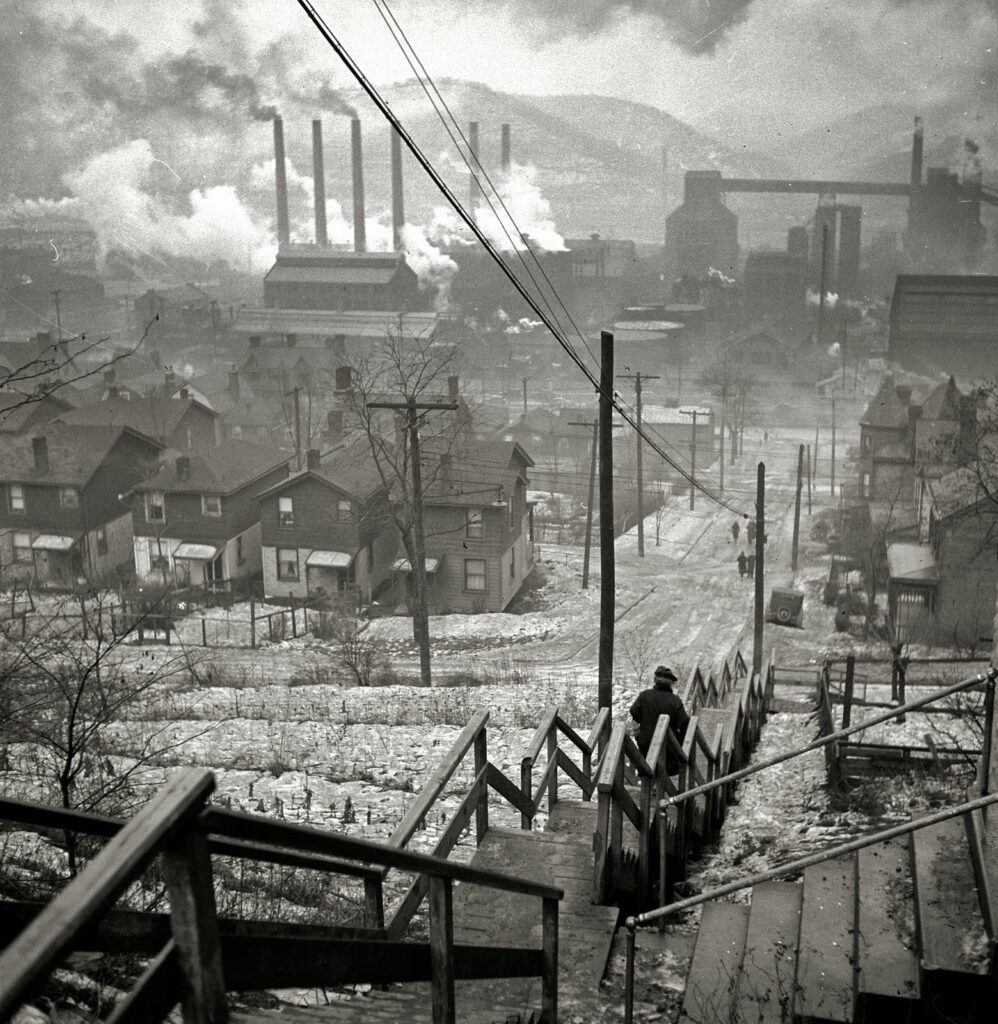
The coal that was removed from the mountains by the blood, sweat, and tears of Appalachian families was shipped off where it would be put to use making steel in massive mills or generating electricity for the nation’s growing cities. In the early years, these mills and power stations turned the skies black with coal smoke and soot resulting in severe respiratory illnesses among nearby residents and many premature deaths—especially among children.
The steel mill owners, like the coal company owners, placed production and profit over the well being of their employees and local communities. When Andrew Carnegie sought to bust the unions, he hired the Pinkerton Agency to combat unionization in much the same way as the Baldwin-Felts Agency. Carnegie would eventually become the richest man in the world at the expense of his steel mill workers, coal miners supplying coal to them, and those who lived near by.
It wouldn’t be until the 1930s that Franklin D. Roosevelt’s New Deal gave workers the legal and political backing necessary to form and maintain unions, end the atrocities of child labor, and end the systems of company “scrip.” Even then, workers and their communities still suffered the brunt of the difficult and dangerous work while wealthy company owners and investors pocketed the majority of profit.
Present-Day
Present day coal mining has improved in safety thanks to technological advances, but it is still some of the most dangerous work in the United States. Debilitating, long term health impacts have remained prevalent for those who worked for the industries. Black lung has claimed more than 75,000 lives since records started being kept in the mid 1960s.1 And, despite a downturn in black lung cases throughout the 70s, 80s, and 90s, coal worker’s pneumoconiosis has become prevalent once again in today’s non-union mines. Companies continue to deny that black lung even exists and continue to block miner’s efforts to seek benefits once they can no longer work. They also find ways to avoid paying retirement healthcare plans and pensions. They do these things all to increase profit and their own personal fortunes.
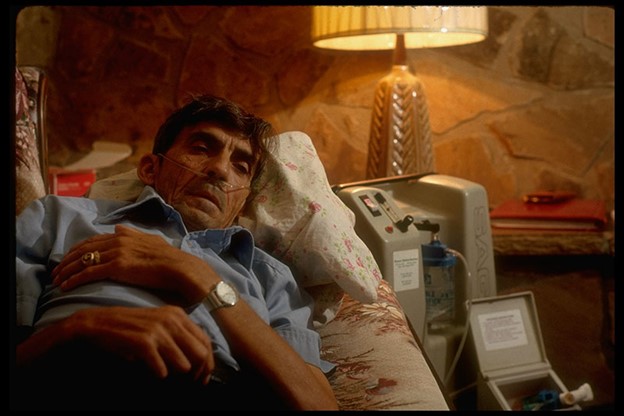
Trillions of dollars have been made building bridges, railroads, cars, massive skyscrapers, and even machines of war using steel produced from Appalachian coal, but the communities that contained those resources remain some of the poorest in the nation.
Coal is the true gospel that breaks the backs of thousands of coal miners and chokes their lungs with coal dust. The desire for a “healthy economy” with jobs and paychecks to afford food from corporate-owned grocery stores blinds people to the environmental health impacts and high cancer rates where coal is extracted, processed, and used.
And so, it must be asked, would a loving God, a God who created this amazing world full of life and beauty, full of so many wonders, that provides us everything we need to live happy health lives—and who sent his only begotten Son to teach us lessons of love and humility and to stand up against the evils of greed—would such a God have placed something here capable of creating so much harm?
Would Jesus have told us it was okay to turn beautiful mountain streams to acidic mine drainage or to turn once beautiful forests into nutrient devoid fields of foreign grasses while laying waste to the world His Father created and so perfectly designed to feed, cloth, and provide medicine for us? Would he agree that it was okay for coal companies to take and horde all of that wealth while those working for them must suffer?
God provided us with everything we need on this Earth well before people began digging fossil fuels out of the ground. For many generations Appalachian families lived in our mountains in a simple balance with what God created. Did we ever truly need coal? Or, was it something someone else wanted?
What if coal wasn’t a gift from God? What if it was a test placed here to be a great temptation?
The bible has the answers for those who choose to listen:
1 Timothy 6:10
For the love of money is a root of all kinds of evil. Some people, eager for money, have wandered from the faith and pierced themselves with many griefs.”
Hebrews 13:5
Keep your lives free from the love of money and be content with what you have, because God has said,
“Never will I leave you;
never will I forsake you.”[a]
The Ten Commandments: Commandment X (Exodus 20:17)
“Thou shalt not covet thy neighbour’s house, thou shalt not covet thy neighbour’s wife, nor his manservant, nor his maidservant, nor his ox, nor his ass, nor any thing that is thy neighbour’s.”
24“No one can serve two masters. Either you will hate the one and love the other, or you will be devoted to the one and despise the other. You cannot serve both God and money.”
Matthew 19:21-24
21Jesus answered, “If you want to be perfect, go, sell your possessions and give to the poor, and you will have treasure in heaven. Then come, follow me.”
22When the young man heard this, he went away sad, because he had great wealth.
23 Then Jesus said to his disciples, “Truly I tell you, it is hard for someone who is rich to enter the kingdom of heaven. 24 Again I tell you, it is easier for a camel to go through the eye of a needle than for someone who is rich to enter the kingdom of God.”
Reading Jesus’ own words begs us to ask who the company owners, wealthy business investors, and politicians really worship. How about you?
- Black lung deaths are in addition to the 104,000+ lives lost in mining accidents. ↩︎