
Some folks may have noticed I took the blog down last year. Given the site stats, I’m guessing not many did. Site analytics showed that it was averaging one or two visits per week. The same was true with Facebook posts which averaged only five or six interactions at most. It appeared, for all intents and purposes, that Thoughts of a Coal Miner was dead.
There are many reasons I’m sure. I wasn’t consistently posting content and the content itself wasn’t great. I’m sure there may have been some quirks with search engines and social media algorithms as well. But I think, perhaps the biggest contributing factor is that interest in Appalachia has waned over the last several years.
We Won…Or Did We?
When I began this blog in 2010, coal and mountain top removal mining (MTR) were both still major focuses of environmental organizations and climate change activists. Coal was considered the dirtiest fossil fuel, still accounted for roughly 45% of electrical generation in the US, and MTR was (and still is) the most environmentally destructive means to extract it.
As I’ve written dozens of times before, my journey began while I was working in the mines seeking labor rights after the United Mine Workers turned their backs on us. At that time, the only other folks trying to keep the coal companies honest were environmentalists fighting against mountain top removal coal mining. On a whim I reached out to a local environmental newsletter and ended up finding my community.
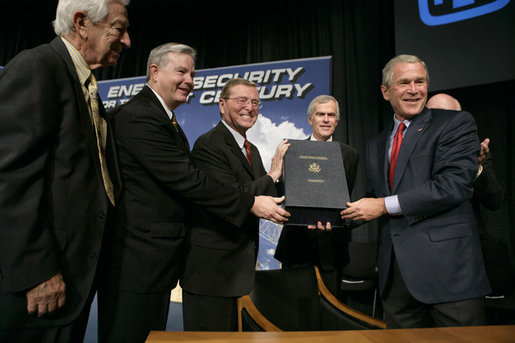
The movement against mountain top removal peaked in 2011 just as the coal industry was being shoved out of electrical generation markets. The Bush administration had cleared the way for it years before—namely through Dick Cheney’s famed Haliburton Loop Hole that was snuck into the 2005 Energy Act. By omitting hydraulic fracturing from the Clean Water and Safe Drinking Water Acts, oil and gas companies were free to pollute water aquifers as they”explored” (exploited) natural gas reserves all across the US, including Pennsylvania’s Marcellus Shale formation and the Wattenburg Gas Field in the Colorado Basin.
It took a few years before all the wells were drilled and fracked, but once they started coming online, the influx of cheap natural gas became a “Hail Mary” for electrical utilities whose coal-fired power plants were aging out of service. Utilities were happy to shut them down given their operating expense and legacy issues including coal ash impoundments, especially after the Kingston Coal Ash disaster became national news. Throughout the country, coal-fired plants were being rapidly replaced with more efficient, combined-cycle natural gas power plants.
In just a few short years, coal’s share of the electrical generation market fell from 45% in 2010 to 38% in 2014 and 20% by 2020. What coal-fired generation remains is mostly being supplied by Powder River Basin coal from Wyoming and Montana.
Appalachian coal markets were especially impacted with some of the industry’s largest employers filing for bankruptcy starting as early as 2013. Companies closed dozens of mines down, laying off thousands of coal miners as their public relations departments shifted blame toward environmentalists and government regulations rather than market competition.
Over the next several years, job scared coal mining families throughout the nation blamed Democrats and their “liberal environmentalist allies.” I watched in horror as mining communities went from voting blue to deep red in an effort to save their only source of a living wage. For those of you who have been with me from the start…didn’t I say that poorly planned and executed environmental activism was pushing people that way? This is my “I told you so” moment.
For environmental activists living outside the region, it was over and done. Many shouted “Victory!” especially the Sierra Club whose Beyond Coal campaign received over a hundred million dollars from Michael Bloomberg. Consequently, Bloomberg was also heavily invested in natural gas. Coal became old news and activists in Appalachia began facing even more challenges without the financial backing of larger organizations.
Coal mining definitely took a hit, but it never stopped entirely. Mines were still operating, supplying the continuing global demand for high-grade metallurgical coal being exported to foreign steel mills. What few coal miners remained were desperate to keep their jobs and started working even more mandatory overtime with longer hours breathing more dust in the process, all while dealing with pay and benefit cuts.
As for the blog, it went somewhat dormant. I was busy finishing up my undergraduate degree and looking for ways to continue fighting the good fight against environmental and social injustice.
Here we go again…
When Donald Trump started drumming up Appalachian coal miner votes, he stirred up one hell of a media storm. Once again the nation’s curiosity became fixated on Appalachia and a flood of journalists and documentarians rushed in to capitalize on the nation’s morbid curiosities with hillbilly stereotypes. The new attention even launched J.D. Vance’s political career given the timeliness of his myopic “Appalachian” memoir a la Hillbilly Elegy.
With all of the new media attention, Thoughts of a Coal Miner regained some of its popularity. I received requests for commentary and articles, including several national publications, syndicated radio shows, and even a book chapter. Not all of it was good however. I learned the hard way that stories and knowledge can be exploited just as much as fossil fuel reserves.
Throughout my time in environmental activism, the work has always been the most important thing. I’ve lived under the false assumption that the more people knew about what was happening in Appalachia, the more power we might have to stop it.
My life as an activist has always been torn between stopping injustice and supporting my family. More than once I put the work ahead of our financial well being in efforts to get the knowledge to larger audiences. This sadly included helping a few journalists and writers only to realize later they were capitalizing on my assistance while we were desperately struggling to make ends meet as a family.
As Trump’s term neared its end and COVID ravaged the land, media attention on Appalachian coal mining faded once more. Meanwhile, mountain top removal sites are still in operation, our streams are still being filled with toxins including chemical byproducts, heavy metals, and acidic mine drainage, cancer rates are still well above average, and coal miners continue getting injured and killed while contracting black lung. They’ve seen even more reductions in pay and benefits while being required to work more mandatory overtime. And it’s only going to get worse.Trump’s tariffs on foreign steel are impacting the metallurgical coal markets, which was/is the final life line for Appalachian mining families. In the years it will take to rebuild the US steel industry (through Japanese foreign investment), Appalachian coal markets will collapse yet again.
Just more bad news for miners who are already exploited and overworked by companies who know how desperate they are for living wage jobs—especially amid the legacy of poverty they keep our communities in. With nearly two decades of people electing coal company officials into office, when coal markets do come back, there will be even fewer environmental regulations and labor rights to protect our miners and communities.
And, as sad as it is to say, we are all facing much bigger problems now. What shred of democracy this country did offer is being actively challenged by a wealthy, egotistical, New York celebrity who enjoys attention and taking bets on whether or not he could be the next Hitler.
And let’s not forget climate change is still looming and environmental injustice is still occurring unabated. Millions upon millions of acres of Canadian forest have been on fire two years in a row. Enough that the smoke covered the sun in northern states and created haze almost two thousand miles away. These are the climate change feedback loops scientists have been warning us about for decades.
Next Steps…
As for the blog. I’ve taken it down and put it back up twice now trying to determine if it is serving any actual purpose at this point.
In the process of deleting and reinstating the blog, I’ve lost some of my original posts along with the original .com domain that’s now owned by someone in China. Some of the earlier posts were corrupted and I’ve had to do some patch up work. Others were just lost.
I am slowly getting back into writing and would like to build this blog into more than just me sitting here writing about the same old things. I took a .org URL and would like to transform it into a space for coal miners to share their experiences and thoughts. I’ll be getting a submission page together quite soonish. We’ll see how it goes. If you would like to post content, feel free to hit me up on my contact page.
That about wraps it up. I could write a book on our experiences in just the past five years, regaling you all in all the frustrations and injustices we’ve ran up against in our search for a meaningful, environmentally sustainable existence, but I’m sure most everyone has enough on their plates as is. Hang in there everyone.
-Nick